Educational Insights 4 – July 2026 – Alexander Richter
Why Brass Band Is Good for Children? (Alexander Richter)
(For German version click here!)
Making music together in a group does far more for children than individual lessons alone: it trains the ear, builds team spirit, and sharpens concentration. But why is the brass band such an ideal setup for young musicians in particular? In this article, Alexander Richter explores the answer — through the sonic, technical, and social qualities that make this ensemble special.
The Foundation: A Living Sense of Community
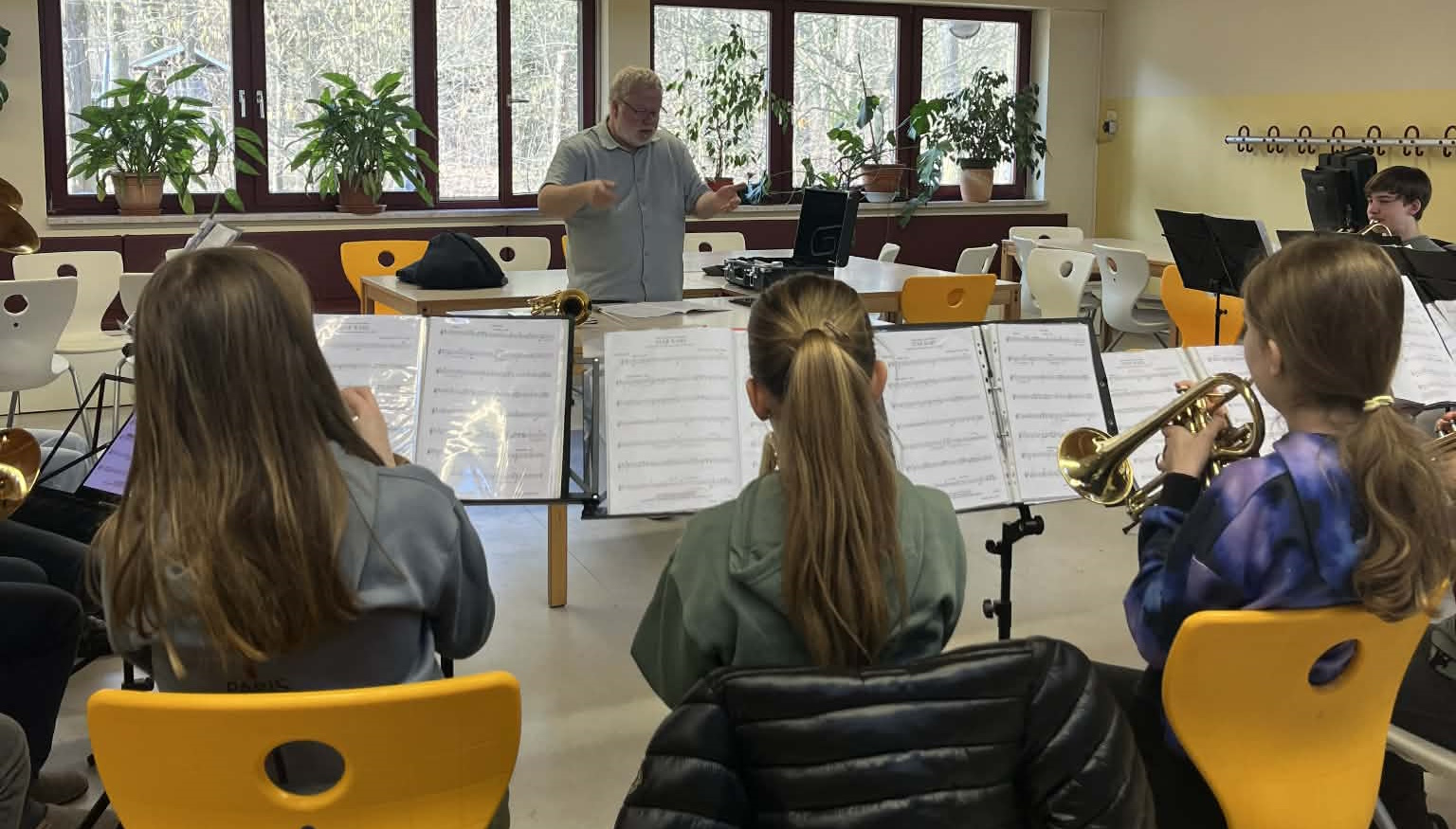
Playing in a brass band means, above all, one thing: teamwork. From the very first rehearsal, children feel how much they depend on one another — and how much fun that can be. Celebrating shared successes, catching each other during tricky passages: this is exactly what makes the bond within a band so special.
Out of this structured „learning from and with each other,“ important social skills grow almost naturally. Children learn to be considerate of one another, to support each other, and they experience firsthand that the final result depends on every single voice.
The Special Ingredient: Shared Breath
The brass band also has real methodological advantages — rooted in the very nature of its instruments. Since the brass instruments (with the exception of trombones) share a related design, young musicians understand each other from day one. Shared breath is more than just a technical detail here — it’s the connecting foundation of the whole band.
This kinship between instruments creates a homogeneous, balanced sound, leading early on to genuine successes in ensemble playing. A nice side effect: mixed-age music-making works almost by itself. Because individual parts cover very different levels of difficulty, younger beginners and more advanced teenagers easily find their place side by side.
Timbre and Technical Demands
As an ensemble, the brass band impresses with an enormous dynamic range — from the very soft to the thrillingly loud. Mastering this dynamic range takes precision and sensitivity. The symphonic percussion section plays a central role here too: richly colorful, versatile, and the rhythmic backbone of the whole formation.
Through the shared rehearsal process, children and teenagers develop musical core skills that reach far beyond the band itself: a refined sense of timing, articulation, and intonation — and, as a bonus, some of the best conditioning a brass player could wish for.
The technical and rhythmic challenges motivate everyone to keep improving and to work with focus.
Variety, Exploration, and the Drive to Achieve
A brass band’s repertoire is stylistically almost limitless — exciting, varied, and full of surprises. It also gives children many different stages to try themselves out on: sometimes in a small group, sometimes as a soloist, sometimes embedded in the full orchestral sound.
Striking the right balance is key here — between the drive to achieve and the sheer joy of making music — and that’s exactly what keeps motivation high. Competitions and an active concert schedule set clear goals and reward all that shared effort.
Conclusion
The brass band is far more than a musical ensemble. Through the special construction of its instruments, its sonic and stylistic variety, and its flexible ways of bringing musicians together, it offers children and teenagers an ideal platform for growth. It combines musical excellence with a strong sense of community — one where every age and skill level finds a lasting place.
